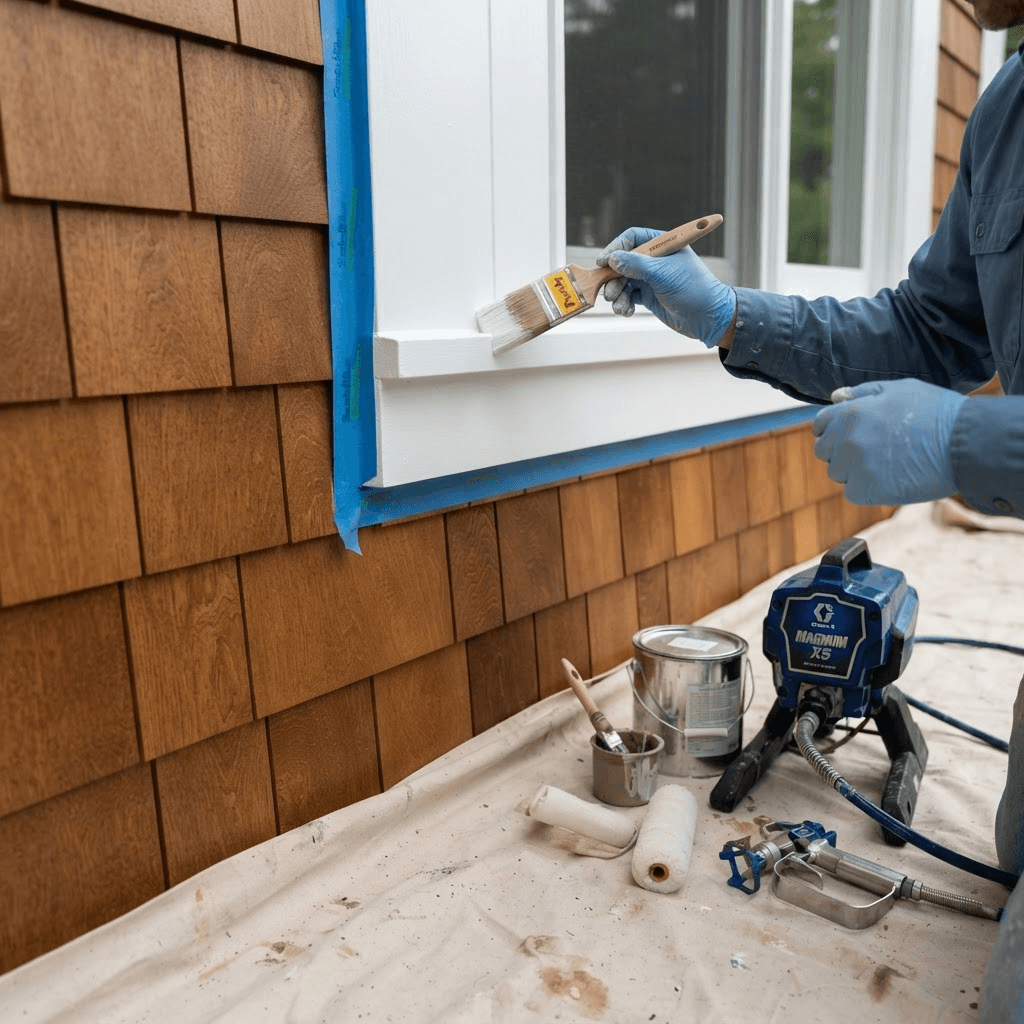
How carefully will the surfaces be prepared?
Homeowners may want to understand how the crew will patch, sand, caulk, prime, and prepare each surface before painting begins.
Before-and-after photos show the finished paint job. Customer Story Videos let homeowners hear what it was actually like to have your painters in the home—the prep, communication, cleanliness, craftsmanship, and final result.
When homeowners are comparing painting companies, that kind of customer proof can help build trust before they choose who to hire.
Photos are excellent visual proof of the finished project. A Customer Story adds something different: what the homeowner experienced during the project.
When painting companies make similar claims about prep, cleanliness, and craftsmanship, hearing an actual customer describe those details can make the differences easier to understand.
A relaxed 10–15 minute remote conversation can produce an authentic Customer Story without bringing a production crew into the customer’s home.
Homeowner Considerations
Painting customers may naturally have questions about what happens between the estimate and the final walkthrough. Customer Stories can address that uncertainty without replacing good proposals, portfolio photos, or written reviews.
Homeowners may want to understand how the crew will patch, sand, caulk, prime, and prepare each surface before painting begins.
Floors, furniture, cabinetry, landscaping, and everyday living spaces all require care during interior and exterior painting projects.
Multi-day painting projects involve schedules, room access, color decisions, sheens, drying time, and changes that need clear communication.
Prospective customers may wonder how the company handles craftsmanship, the final walkthrough, and any touch-ups that are identified.

Homeowners notice how floors and furniture are protected, whether the crew communicates color or sheen decisions clearly, how the work area is organized, and whether the final walkthrough is thorough.
A video testimonial lets prospective customers hear those practical details from someone who experienced the project.
Project values, margins, and customer acquisition costs vary significantly among painting companies. The most credible way to consider potential value is to identify where the story will be used and evaluate it with your own numbers.
When homeowners are making a larger painting decision, they may spend more time comparing companies, processes, and craftsmanship. A relevant Customer Story can help them understand what working with the company is actually like.
The most useful story is usually one that matches the prospect’s project. Someone considering cabinet refinishing will often find a cabinet Customer Story more relevant than a general exterior painting testimonial.
Interactive Painting Proof Estimator
Use your own project economics to explore potential value. The starting values below are examples, not painting industry averages.
Example values only — replace with your own numbers
Estimated gross profit per project
$2,400
Potential gross profit influenced
$2,400
Customer Story cost
$497
Potential gross-profit-to-cost ratio
4.8 to 1
This calculator is illustrative only. A customer testimonial video cannot guarantee additional painting projects. Use your own business economics to estimate what stronger customer proof could potentially be worth. No email or signup required.
Claims vs. Evidence
Your website should still explain your process. A customer testimonial video adds specific observations from the person who lived through it.
What the painter says
That is a reasonable promise, but many companies can make it.
Homeowner: “They spent a lot of time preparing everything before they painted.”
Interviewer: “What did you notice about the preparation?”
Homeowner: “They protected the floors, patched the walls, and carefully worked through the rooms before the painting started.”
Illustrative example — not a real customer quote.
What the painter says
A Customer Story can give that broad claim practical detail.
Homeowner: “The house stayed surprisingly organized.”
Interviewer: “What did that look like day to day?”
Homeowner: “They protected our furniture and floors and cleaned up before they left each day.”
Illustrative example — not a real customer quote.
What the painter says
The useful evidence is what communication looked like during a real project.
Homeowner: “We always knew what room they were working in and what would happen next.”
Interviewer: “How did that affect the experience for you?”
Homeowner: “It made it much easier to plan around the work and feel comfortable asking questions about colors and touch-ups.”
Illustrative example — not a real customer quote.
Cabinet refinishing, whole-home interiors, exterior repaints, and detailed trim work often require more homeowner consideration because the work is highly visible, occurs around the home, and can involve meaningful disruption.
A relevant Customer Story can help prospective customers understand the contractor's process and what the experience was like.

A smartphone can capture a useful customer story. Painting environments do create a few specific audio and lighting challenges, so choose the interview location carefully.
Running fans, air scrubbers, and empty rooms can create noise or echo that makes the homeowner difficult to hear.
Move to a quiet furnished room where rugs, curtains, and furniture help absorb sound.
A bright window behind the homeowner can leave their face underexposed.
Face the homeowner toward the window so soft natural light reaches their face, with the phone positioned near the window.
Written scripts can make customers focus on remembering lines instead of describing what happened naturally.
Ask conversational questions, listen carefully, and use follow-up questions instead of giving the customer lines to repeat.

After the interview, capture several short, steady clips of prep work, taped trim, drop cloths, patched surfaces, cabinet doors, clean cut lines, exterior details, and finished rooms.
These clips can be layered over the homeowner's story during editing to provide visual context and help show the work being discussed.
The 4-Part Framework
Start with the project and decision, then ask about preparation, communication, craftsmanship, and the final result. Avoid questions that assume a previous contractor was bad or that the customer chose you because of price.
Interviewing Lesson
The follow-up question is often where the useful story appears. Do not script customers; invite them to explain what they noticed.
Homeowner: “They were really careful with the house.”
Interviewer: “What did they do that made you feel that way?”
Homeowner: “They protected the floors and furniture and kept everything organized while they worked.”
Illustrative example — not a real customer quote.
Story Structure
A useful 60–90 second painting customer case study moves through the decision and experience instead of stopping at “They did a great job.”
0–15 sec
15–35 sec
35–65 sec
65–90 sec
Basic testimonial
“They did a great job.”
Painting customer case study
Project → Decision → Preparation → Experience → Result
A Territory.io Customer Story
Real Homeowner + Real Painting Project + Real Decision + Real Experience + Real Result + Real Recommendation
Build a Story Library
A homeowner considering cabinet refinishing will usually find a cabinet Customer Story more relevant than a generic exterior painting testimonial. Over time, build a library that reflects the projects you want to discuss.
Distribution
The finished video becomes useful when it appears near a real homeowner decision. Choose the placement based on the service and the stage of the buying process.
Send a relevant story after the estimate so the homeowner can hear about preparation, cleanliness, communication, and the final walkthrough from someone with a similar project.
Thanks again for having us out. Here’s a quick story from another homeowner who recently completed a similar painting project with us.
Place interior painting stories on interior pages, exterior stories on exterior pages, and cabinet refinishing stories beside cabinet project details.
Match the story to the service whenever possible so the prospective customer can see a process and result that relate to their own project.
Place a relevant Customer Story near the conversion point for prospects arriving from paid search. Use it alongside clear service information and an accessible contact path.
Customer proof can support the landing-page decision, but it should not replace accurate scope, location, and service information.
Use a real homeowner alongside portfolio photography and written reviews to show both the finished work and the customer experience.
The combination gives visitors more context than any single proof format can provide on its own.
Before-and-after photos show what changed. The Customer Story explains what it was like to have the work done.
Pair the finished story with project photography and use shorter clips in email, social media, or estimate nurture where appropriate.
This Wicked Pool Service video is a pool service example, not a painting testimonial. It shows how a relaxed remote interview can be edited into a concise story using the customer's own words.
Wicked Pool Service: This example is from another home-service trade and demonstrates the interview-led Customer Story format.
View all Customer Story Video examplesYou can absolutely create a strong painting testimonial video yourself. If you would rather stay focused on estimates, crews, and painting projects, Territory.io can handle the interview, storytelling, and editing for you.
Transparent Pricing
No subscription · Pay only after approval
Direct conversation with Joe Cronin · No aggressive sales pitch
Got Questions?
Practical answers about creating and using video testimonials for a residential painting company.
Painting businesses handle a wide range of project sizes, from smaller rooms to whole-home interiors, exterior repaints, and cabinet refinishing. Because project values and margins vary, the most useful way to evaluate ROI is with your own business numbers. Customer Stories may be especially valuable for larger projects, competitive estimate follow-up, and marketing channels where homeowners are comparing several painting companies.
Ask soon after a successful project while the experience is still fresh. Keep the request simple and low-pressure: “Thanks again for trusting us with your home. We’re putting together a few short Customer Stories so other homeowners can hear what the experience is really like. Would you be open to a relaxed 10–15 minute remote conversation about your project?”
The painters do not need to appear in the video. A strong Customer Story can work with the homeowner describing the experience, supported by project photos or footage.
Yes. Keep the phone at eye level, face the homeowner toward soft natural light, use a small external microphone when possible, and record in a quiet furnished room. Avoid running fans, air scrubbers, and empty rooms that create echo.
We send the finished edit for review before it is approved. If the customer wants a pause, section, or awkward moment removed, we can adjust the edit before final delivery.
The $497 price is a one-time flat fee per finished Customer Story Video, with no subscription or upfront deposit. You pay only after reviewing and approving the finished video.
Next Step
Schedule a relaxed conversation with Joe Cronin, or continue exploring our guide to video testimonials for contractors.